At the edge of the world
When the advanced underwater vehicle Ran was lost beneath Antarctica’s Thwaites glacier, it was a major setback for polar science. Through Ocean Support, Voice of the Ocean helped close the funding gap — and helped bring Ran back as Ran II.
- Ran was lost beneath Antarctica's Thwaites glacier in 2024, a major setback for polar science.
- It was an advanced autonomous underwater vehicle that opened rare windows into hidden sub-ice ocean processes.
- The loss created a funding shortfall, interrupting vital long-term observations needed to predict future sea levels.
- Voice of the Ocean's Ocean Support closed the gap in 2025, enabling Ran's return as Ran II.
- Ran II will resume Antarctic work and also operate in the Baltic annually, restoring continuity and expanding observations.
Beneath the ice
At the edge of the world, science moves differently.
Beneath Antarctica’s vast ice shelves, there are no easy second chances. The water is dark, cold and remote. The ceiling is ice. The conditions are unforgiving. And the questions being asked there could shape how we understand the future of coastlines around the world.
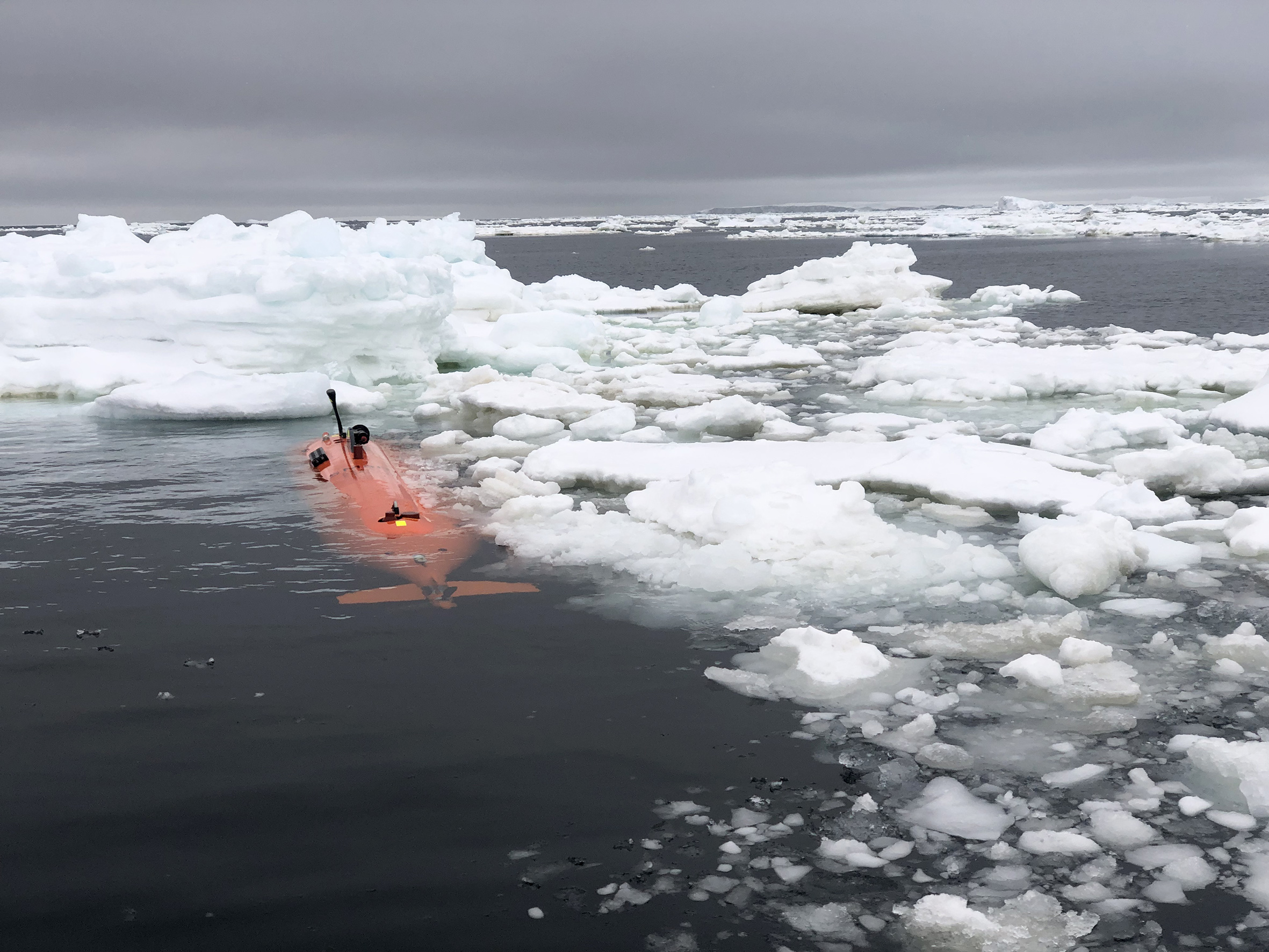
In 2024, during an expedition led by a research team from the University of Gothenburg, the Kongsberg HUGIN autonomous underwater vehicle called Ran was lost beneath Antarctica’s massive Thwaites glacier.
Nicknamed the ‘Doomsday glacier’, Thwaites is a river of ice half the size of Sweden. Scientists study it because its collapse could contribute to dramatic sea level rise, with consequences far beyond Antarctica.
But to understand what is happening there, researchers first have to get beneath the ice.
That is where Ran came in.
A rare window into a hidden world
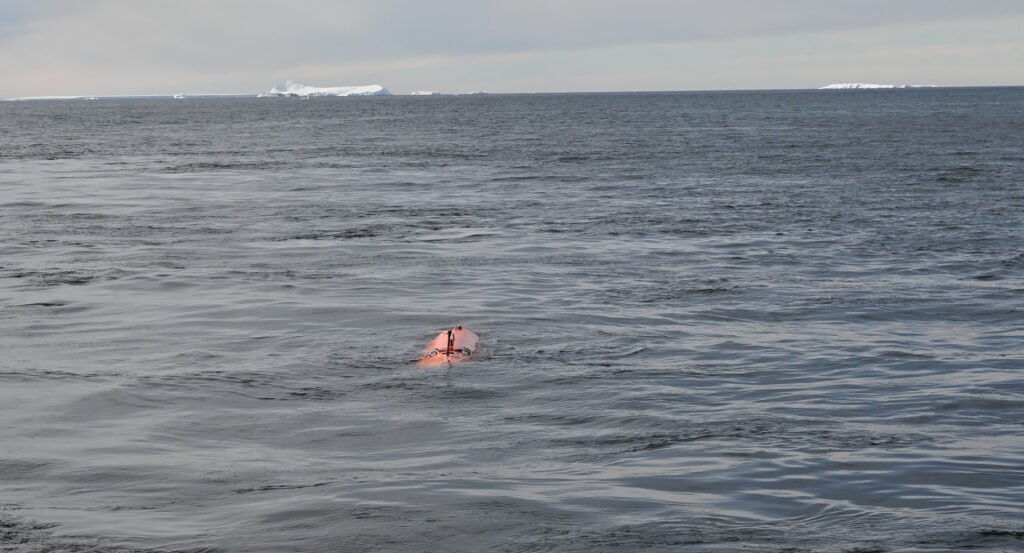
Ran was not an ordinary research instrument.
It was a large, self-guiding robotic submersible designed to travel deep beneath glacial ice, into places too dangerous or inaccessible for humans. Equipped with high-resolution sonar and sensors, it could map the world above and below, profile the water column, and carry emerging tools such as DNA samplers that detect traces of life in seawater.
In places like Antarctica, this kind of technology does more than collect measurements. It opens a rare window into systems that are otherwise almost impossible to see.
Beneath an ice shelf, change is not always visible from the surface. Warm water can move in hidden channels. Ice can melt from below. The shape of the seabed can influence how the glacier behaves. Each measurement helps scientists build a clearer picture of how ice, ocean and climate are connected.
Ran helped make that hidden world observable.
Its loss was therefore more than the loss of a machine. It was the loss of access — to data, to continuity, and to one of the most important frontiers in climate research.
When science loses its eyes beneath the ice
Research in extreme environments always carries risk. At the poles, that risk is part of the work.
Technology sent beneath glacial ice cannot simply be retrieved by turning a boat around. Communication is limited. Navigation is complex. The environment itself is moving, shifting and changing.
When Ran was lost, the setback was immediate. The vehicle was advanced, specialised and expensive. Replacing it would require far more than scientific will. Insurance and public funding covered part of the cost, but a significant shortfall remained.
For Swedish polar research, and for the wider scientific community, that gap mattered.
Without a replacement, researchers would lose a vital tool for observing the processes shaping Antarctica’s future. And because Antarctica is connected to the global ocean, that loss would reach beyond one research team, one glacier or one expedition.
What happens beneath the ice does not stay beneath the ice.
Ocean Support steps in
This is where Voice of the Ocean’s Ocean Support work comes into focus.
Ocean Support exists to enable science that is vital, but difficult to realise. It is not simply a funding body. It helps close practical gaps — in infrastructure, expertise, equipment and technical capacity — so strong scientific ideas can become real-world work.
In 2025, through a major donation channelled via Voice of the Ocean and Ocean Support, the funding gap was closed. Ran was reborn as Ran II.
It is a clear example of what Ocean Support is designed to do: step in where a critical piece of science might otherwise stall, and help restore momentum.
Not every ocean story begins with discovery. Some begin with loss.
The important question is what happens next.
Ran II: a tool for a changing planet
Ran II will mainly continue to be used to explore and monitor Antarctica. But its reach will also extend to the Baltic, where Voice of the Ocean will fund and facilitate its deployment for up to three weeks every year.
That connection matters.
At first glance, Antarctica and the Baltic may seem like very different worlds: one a remote polar frontier, the other a shallow, enclosed sea at the heart of northern Europe. But both are places where the ocean is changing, and where the details beneath the surface matter.
In Antarctica, Ran II can help scientists understand the hidden interactions between ocean water, ice shelves and the seabed.
In the Baltic, it can support work such as mapping sea ice and charting sensitive seabed habitats.
Different waters. Different pressures. The same underlying need: to see more clearly what is happening beneath the surface.
Why replacement matters
In ocean science, continuity is often as important as discovery.
Losing an instrument like Ran can interrupt years of work. It can break a chain of observations, slow down research teams, and delay answers to questions that are already urgent.
Replacing Ran means more than restoring a piece of equipment. It means restoring the ability to continue asking difficult questions in difficult places.
It means scientists can keep exploring the seas beneath Antarctica’s ice shelves. It means they can keep collecting the measurements needed to improve predictions of future sea levels. It means a rare technological capability remains available to the research community.
As Anna Wåhlin, Professor of Physical Oceanography at the University of Gothenburg, said:
“We are very grateful for the donation from VOTO, which has enabled us to replace Ran. We can now continue exploring the seas beneath Antarctica’s ice shelves – research that is needed to accurately predict future sea levels and interpret climate information.”
From loss to action
The story of Ran is a reminder that ocean science depends on more than curiosity.
It depends on tools. On logistics. On funding. On people willing to act when essential work is at risk of stopping.
Voice of the Ocean was founded to help close gaps in ocean understanding. Sometimes that means collecting data directly. Sometimes it means sharing knowledge openly. Sometimes it means supporting the researchers, vessels and technologies that make discovery possible in the first place.
Through Ocean Support, VOTO helps turn overlooked potential into action. In this case, that meant helping bring a lost vehicle back into scientific life — not as a symbol, but as a working instrument ready to return beneath the ice.
Ran II will continue where Ran left off.
Beneath Antarctic ice shelves. Across Baltic waters. In places where the ocean still holds answers we cannot afford to miss.
Photograph credits:
1st: Anna Wåhlin
2nd: Li Ling