Most people love the sea. Fewer know it deeply. Through Ocean Books, Voice of the Ocean is helping close that gap — using stories, science and visual beauty to turn affection for the ocean into understanding.
- Bridges the gap between affection and understanding, turning love of the sea into deeper scientific, cultural and ecological knowledge.
- Small, deliberate imprint publishes 10 to 12 carefully curated books yearly, prioritising impact over volume and slow, attentive reading.
- Combines photography, essays, science and storytelling to make the ocean visible, intimate and lasting in readers’ lives.
- Rooted in the Baltic yet globally relevant, using local stories to illuminate wider climate, history and biodiversity issues.
- A multidisciplinary team and international partners amplify reach, making books that inform, warn and inspire lasting care.
The sea we love, but do not always know
Ask people how they feel about the sea, and the answer usually comes easily.
They love it.
They long for it. They dream of beaches, breaking waves, seabirds, summer swims and the sound of water moving against shore. The ocean lives strongly in the imagination — as escape, memory, beauty, freedom and horizon.
But ask what people know about the sea, and the answer often becomes quieter.
Scientifically. Historically. Culturally. Ecologically.
For something so central to life on Earth, the ocean can still remain strangely unknown. We love its surface, but not always its systems. We recognise its beauty, but not always its importance. We feel connected to it, yet often take it for granted.
That is the gap Ocean Books exists to close.
“I’ve never met anyone who says, ‘I hate the sea’,” says publisher Jeppe Wikström. “At the same time, people often take the sea for granted. It’s just there. It’s wet. But it’s not just there – life first appeared in the ocean and it remains fundamental to our existence today.”
Ocean Books is the publishing imprint led by Wikström within Voice of the Ocean. Its tagline is simple: Publishing with a purpose.
That purpose is to use knowledge, inspiration and storytelling to bring the ocean to life.
Books that go deeper
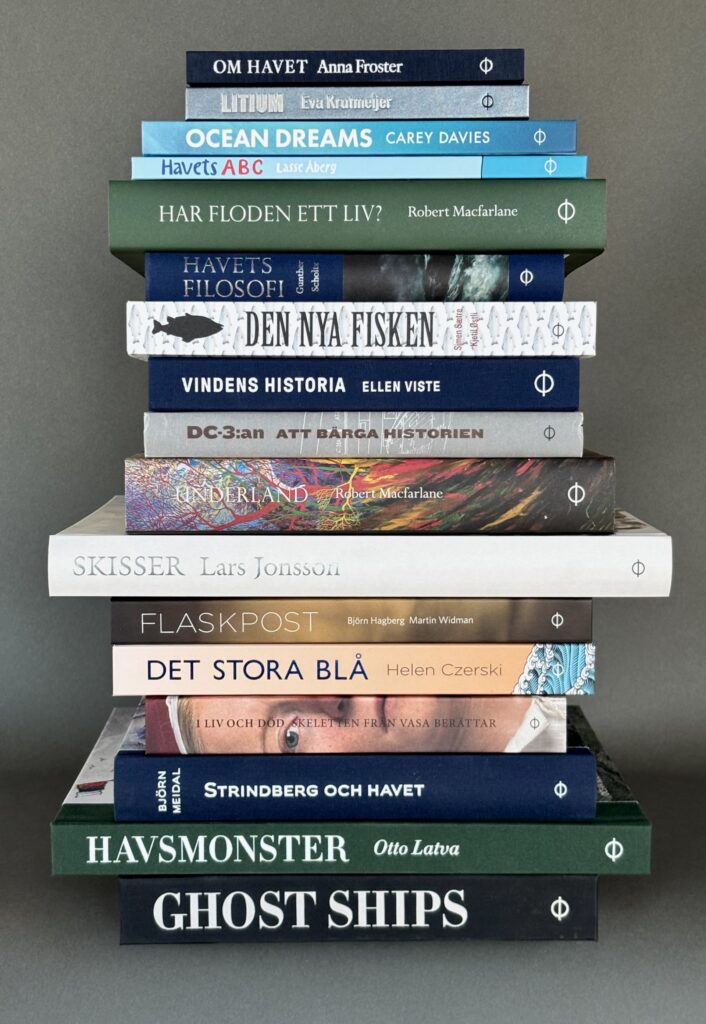
Ocean Books publishes a focused list of around ten to 12 carefully chosen titles each year. The books are primarily aimed at Swedish readers, but many have an international life in English.
The scale is deliberate.
This is not publishing by volume. It is publishing by intention.
“Our goal is not to publish a hundred books a year,” says Jeppe. “We’re going to stay small, with really well-selected titles. But we craft those books to have a big impact.”
That idea sits close to VOTO’s wider way of working. Find the gap. Build with care. Make knowledge accessible. Let science, culture and storytelling support one another.
Ocean Books begins with something many people already have: affection for the sea. But affection can deepen when it is given context. A beach becomes richer when you understand the birds moving above it, the fish beneath it, the light over it, and the living systems that make it what it is.
“When you also learn to love the beach, the seabirds, the fish, the light, that experience of loving the ocean becomes so much deeper.”
This is where books can do something distinct.
They slow the reader down. They create space for detail. They let photographs, essays, drawings and stories carry knowledge in a way that feels intimate rather than instructional.
They help people read the ocean more closely.
Ghost ships, sea monsters and living systems
Jeppe’s own publishing career began close to the water.
An early photo-led book, Harmony of the Stockholm Skerries, convinced him to leave his job and become a full-time publisher. Since then, the sea has remained a recurring current through his work. He estimates that he has published more than 50 books connected to the ocean.
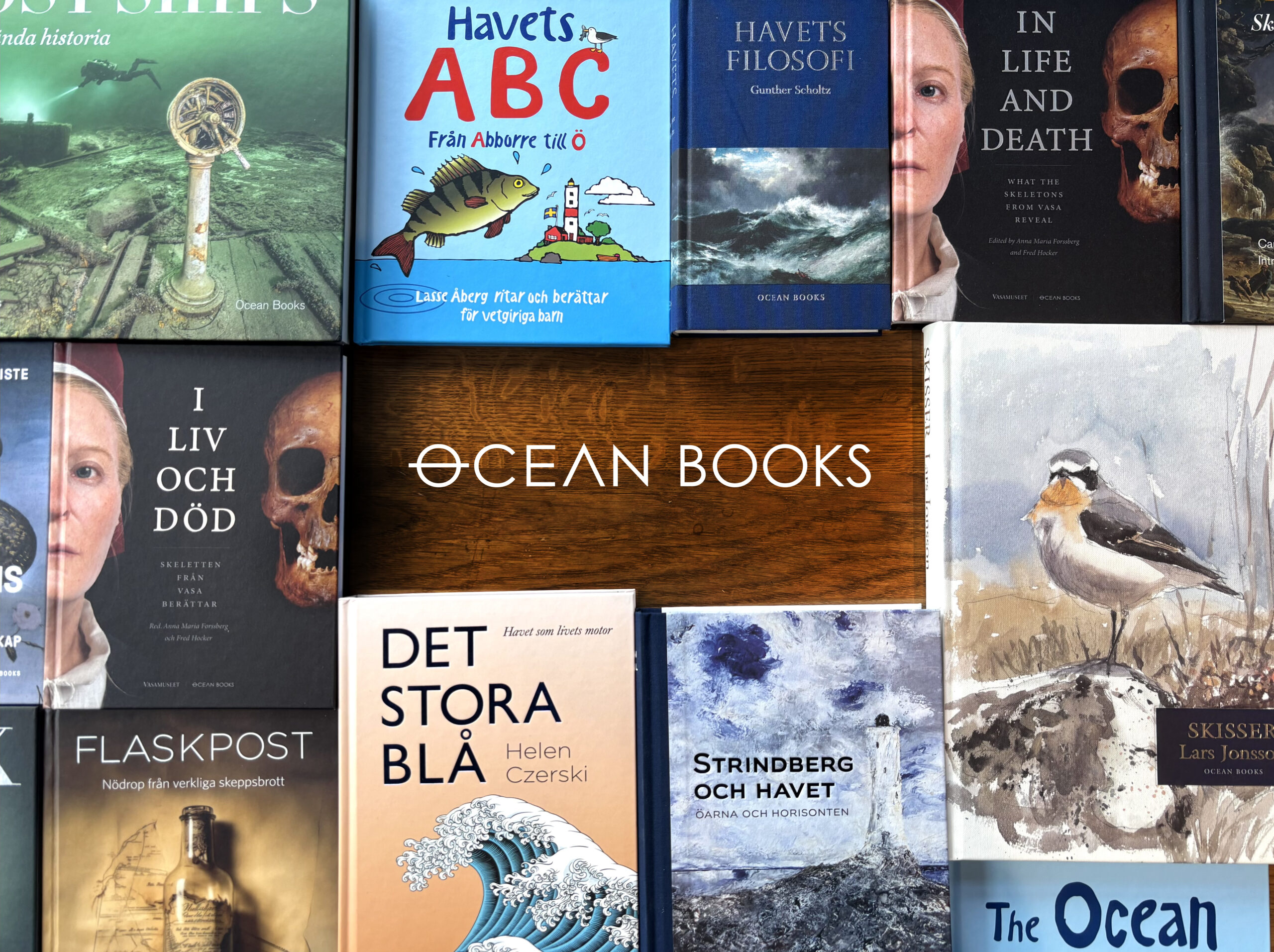
His path crossed with VOTO founder Carl Douglas around 15 years ago. The two began talking about books. But it was not until 2019 that the collaboration fully took shape, when Jeppe worked with Carl, marine archaeologist Björn Hagberg and photographer Jonas Dahm on Ghost Ships — a lavish book of Baltic shipwreck photography and history.
Ghost Ships became an international success, translated into multiple languages. More ocean-focused titles followed. In 2023, VOTO made a strategic decision: instead of publishing ocean books through an external house, it would build its own.
Ocean Books was born.
The imprint is founded on four cornerstones: the ocean itself, history and science, photography, and environmental issues. Some books touch all four. Others touch one or two. Together, they allow for a wide range of subjects, all held by the same underlying thread.
The sea.
Recent publications include The Blue Machine by ocean physicist Helen Czerski, published in Swedish; The New Fish, a book warning of the dangers of farmed salmon; a richly illustrated volume on sea monsters; a German-language book on the philosophy of the sea; a 400-page study of Swedish playwright August Strindberg’s connection to the ocean; and children’s books created with VOTO’s Ocean Education arm.
From shipwrecks to sea monsters, from science to sketchbooks, the list is broad. But the purpose remains clear: to make the ocean more visible, more understandable and harder to ignore.
The Baltic as a starting point
Ocean Books is a Swedish imprint anchored within VOTO, so the Baltic Sea is a natural focal point.
But the Baltic is never only local.
It is a sea of wrecks and memory, of fragile ecosystems and cultural crossings. It is a place where climate, history, biodiversity and human pressure can be read in unusually concentrated form. It is also a way into wider ocean questions.
As Jeppe puts it:
“Sometimes it’s the main subject; sometimes it’s the stepping stone to a wider focus.”
He points to Skisser, a sketchbook by Lars Jonsson, the renowned bird painter on Gotland. All the images come from a single Baltic beach, yet the birds themselves are familiar across the world.
“In one sense it’s very local,” he says. “In another sense, very global.”
That is often how the ocean works.
A beach can be specific and universal at the same time. A bird on Gotland can belong to a migration route far beyond Sweden. A shipwreck can tell a local story, while also revealing patterns of trade, war and human movement. A fishery can speak to both regional culture and planetary pressure.
Ocean Books gives these connections a form readers can hold.
A publishing house with ocean people
Ocean Books is a publishing house, but its core team is not made up only of traditional publishing people.
Jeppe is a photographer-turned-publisher. Björn Hagberg is a trained marine archaeologist-turned-writer. Martin Widman is originally an archaeologist, now an editor and writer.
That mix matters.
The books are shaped by people who approach the sea from different directions — through images, history, archaeology, writing, culture and public communication. The result is not only a catalogue of titles, but a broader attempt to translate ocean knowledge into forms that can travel.
“We come from different perspectives,” says Jeppe. “The most important thing is that everybody is really passionate about the sea and everything connected to it.”
Ocean Books also extends its reach through partnerships. Recent and upcoming projects involve collaborations with Stockholm’s National Museum, the National Maritime Museum, Liljevalchs art gallery, the Royal Academy of Sciences and the newspaper Dagens Nyheter.
A partnership with British publisher Bloomsbury and its maritime imprint Adlard Coles will open international channels for most titles.
“They have the global reach, and a long history of talking to readers about the sea,” says Jeppe. “It’s a perfect match.”
The ambition is not simply to publish books in Sweden. It is to let ocean stories move further.
From the Baltic to the world.
Why books still matter
In the age of endless streaming, scrolling and digital distraction, the question is fair: why invest so much energy in printed books?
Ocean Books has a clear answer.
Books work differently. Especially illustrated books. They move between generations, between homes, between languages and between forms of attention. They are objects of knowledge, but also objects of affection.
“A book, especially an illustrated book, transcends borders like age, culture, gender and sometimes even language,” says Jeppe.
Books also travel along lines of trust. They are bought, given, recommended, kept, displayed and returned to. Jeppe estimates that around half of Ocean Books’ publications are bought as gifts.
That matters for ocean literacy. A book given as a gift can become more than information. It can become a shared invitation to look again.
“A beautifully bound, well-designed, illustrated book is a wonderful gift that an e-book or an audio book can never be,” he says.
There is also the question of time.
Much online content behaves like a mayfly: here today, gone tomorrow. A good book can remain present for years, continuing to find readers long after its first publication.
“That isn’t the case for a good book,” he says. “Ghost Ships is now seven years old and still selling. It still makes people happy.”
That kind of endurance is part of the point.
The ocean needs fast communication, but it also needs slower forms. Work that lasts. Images that stay with people. Stories that can be revisited. Knowledge that is not swallowed by the next scroll.
Beauty, warning and purpose
Ocean Books does not have one tone for every title.
Some books are built around wonder. Others around warning. Some bring readers closer to beauty; others ask them to face damage, pressure and loss.
The tension is necessary.
To communicate the ocean honestly is to hold both at once: its abundance and its fragility, its beauty and its exploitation, its capacity to inspire and its urgent need for protection.
“Different books have different purposes,” says Jeppe. “The sketchbook by Lars Jonsson aims to show us what a wonderful world the beach is. The New Fish, on the other hand, is an alarm bell. Each book has its own role to play.”
That range is important.
People come to the ocean in different ways. Some arrive through birds. Some through shipwrecks. Some through science, children’s books, art, monsters, food systems, environmental crisis or the sheer pleasure of a beautiful photograph.
Each doorway matters if it leads to deeper understanding.
And understanding is where action begins.
Giving the ocean a voice
Ocean Books is part of VOTO’s wider Ocean Literacy work: films, books, games, journalism, education and cultural projects that bring the ocean into public life.
Its role is specific, but powerful.
To make books that people want to read, keep and share. To bring science into language. To bring history into view. To make visual beauty carry meaning. To help readers move from loving the sea in a general way to knowing it more deeply.
Jeppe quotes the writer Simon Sinek: people do not buy what you do, they buy why you do it.
For Ocean Books, that why is clear.
“The authors are talking to the readers through the books we help them create,” says Jeppe. “We know not only what we’re doing – but why we’re doing it. We want to give the ocean a voice.”
That line could stand for more than a publishing imprint.
It speaks to the wider work of Voice of the Ocean: bringing what lies beneath into public understanding, and turning that understanding into care.
Because the sea is not just there.
It is where life began. It is where climate, culture, history and biodiversity meet. It is beautiful, threatened, generous and still insufficiently understood.
To protect it, we first have to read it.