Built for shallow, coastal and strongly layered seas, the SeaExplorer 200 is a new generation of underwater glider shaped by VOTO’s years of work in the Baltic. Lighter, more efficient and designed for endurance, it could help scientists observe the upper ocean in far greater detail.
- Designed for shallow, coastal and strongly stratified seas, operational to 200 metres, optimised for upper ocean observation.
- Born from Baltic testing through close collaboration between Voice of the Ocean and ALSEAMAR, driving problem-led design.
- Lighter and more efficient than deep-rated gliders, modular payloads, endurance up to 75 or 135 days depending on batteries.
- Enables high-resolution, continuous upper-ocean data in shallow, layered environments, reducing missions and increasing yearly profiles substantially.
- Signed memorandum formalises partnership, promotes open access, training and wider global use in estuaries, shelves and nearshore seas.
A glider made for difficult water
Not all seas are deep.
Some ocean environments are shallow, layered and close to land. Places where freshwater meets saltwater, where human pressure is high, where ecosystems change quickly, and where the signals of climate, pollution and biodiversity loss can be sharp and complex.
They are also difficult places for ocean technology.
The Baltic Sea is one of them.
Shallow, semi-enclosed and strongly stratified, the Baltic behaves less like a single blended body of water and more like a stack of seas. Fresher water lies near the surface. Denser, saltier water sits below. Between them are layers that resist mixing, creating a world of gradients, thresholds and hidden movement.
For years, many believed autonomous underwater gliders — the long-range ocean robots designed to travel through deeper seas — would struggle here.
Voice of the Ocean decided to test that assumption.
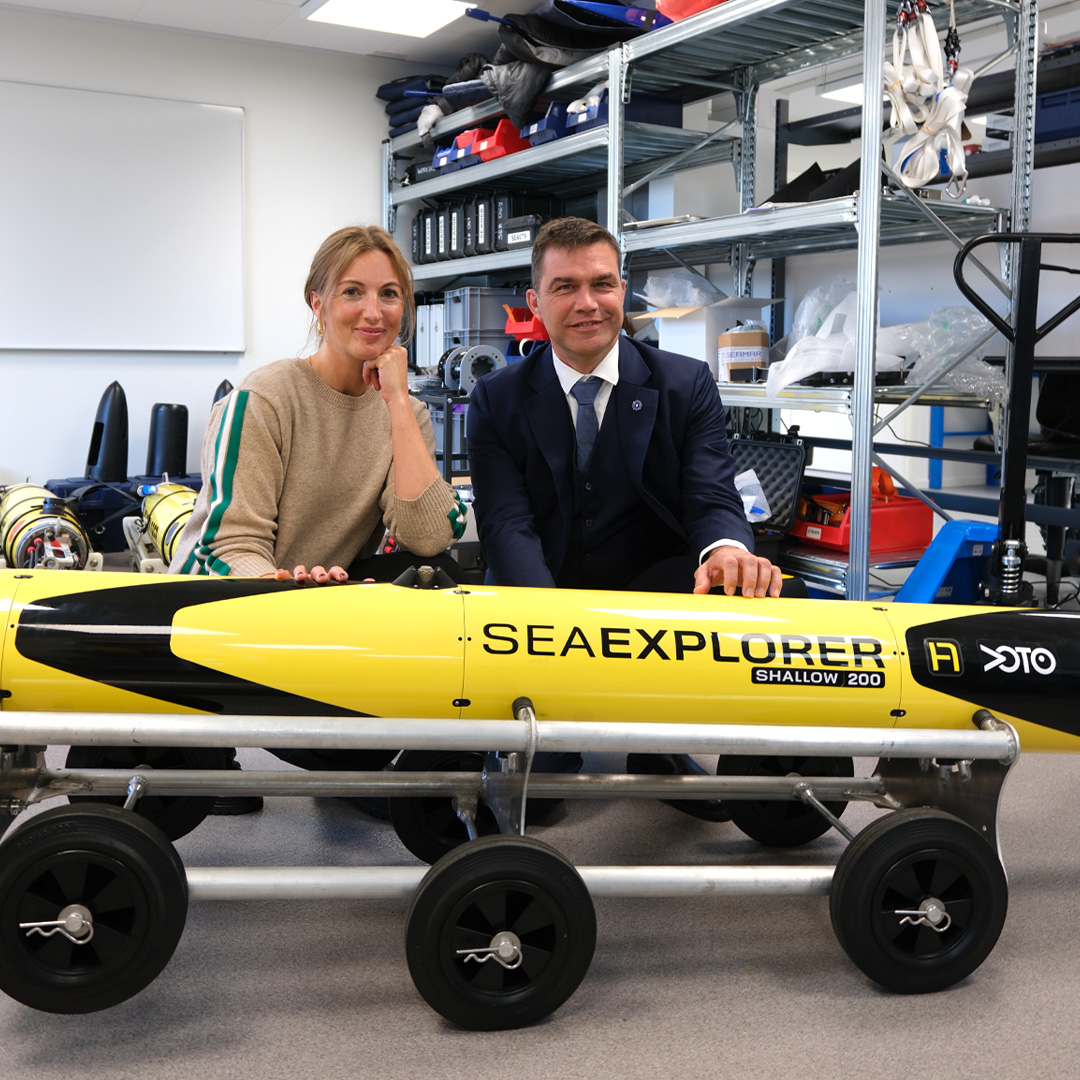
The result is now helping shape a new generation of ocean observation: the SeaExplorer 200, a shallow glider developed by French marine technology company ALSEAMAR, with VOTO as a close collaborator and early driver of the need behind it.
Why shallow seas need different tools
Underwater gliders move without propellers. Instead, they adjust their buoyancy, rising and sinking through the water in long, slow ‘yo-yo’ patterns. In deep ocean environments, that gives them room to glide for hundreds of metres before turning again.
In shallow seas, the rhythm is different.
A glider may only be able to dive tens of metres before it has to climb again. That means more cycles, more energy use and shorter missions. Add strong stratification — layers with different salinity, temperature and density — and the challenge becomes even greater.
The Baltic made those limits visible.
As Olle Glader, VOTO’s Head of Ocean Tech, explains in the Logbook:
“A big misconception we have as ‘land animals’ is that water naturally mixes easily,” he says. “You think of a bathtub where everything blends. You get huge amounts of fresh water flowing into the Baltic basin from surrounding rivers, and limited outflow to the open ocean through the narrow Danish Straits, so there is very little ‘stirring’ going on, and it creates these pronounced layers.
“When you create visuals of it like our team has done, with different colours, you can really see these different layers. They look almost like strata in rock. You even get internal waves between layers, the same effect you can see through a glass in a cocktail. It’s like seas within seas, stacked on top of each other.”
For a glider, those seas within seas are not poetic detail. They are an engineering problem.
They affect how the vehicle rises, sinks, steers and conserves energy. They determine how long it can stay at sea, how often it must be recovered, and how much data it can collect before returning to shore.
Testing what was thought impossible
When VOTO first began exploring the idea of gliders in the Baltic, developers and engineers were sceptical.
The existing gliders had been built for deeper waters: the Mediterranean, the North Atlantic, and polar seas. The Baltic was something else entirely. Around half of it is less than 50 metres deep. Its deepest point reaches only around 459 metres. Its layers are sharp, persistent and difficult to predict.
But VOTO’s role is often to work in precisely those gaps, where important science is needed, but the available tools do not yet fit the problem.
The foundation built a close working relationship with ALSEAMAR and began testing SeaExplorer gliders in the Baltic. The results challenged expectations.
Gliders could work in the shallow, stratified Baltic. They could gather high-resolution data, navigate the layers and help build a continuous picture of one of the world’s most pressured seas.
That experience did more than prove a point. It revealed a need.
If deep-rated gliders could be adapted to work in shallow seas, what could be achieved with a glider designed for those conditions from the start?
Built for the upper ocean
The SeaExplorer 200 answers that question.
Engineered for coastal and shallow-water missions down to 200 metres, the glider is designed for nearshore environments where efficiency, stability and endurance matter. It is lighter than deeper-rated models, can carry larger batteries, and is built to operate where conventional autonomous platforms may struggle.
ALSEAMAR describes the SeaExplorer 200 as optimal for coastal and shallow-water missions between 20 and 200 metres deep. The glider is compatible with SeaExplorer 1000 payloads and ALSEAMAR’s GLIMPSE piloting interface, allowing scientific teams to build on existing systems while expanding into new environments.
Its technical capabilities are significant. Depending on battery configuration, ALSEAMAR lists endurance of up to 75 days and 1,350 kilometres with a single battery, or up to 135 days and 2,500 kilometres with a double battery. It supports modular payloads for missions including physical oceanography, biogeochemistry, dissolved gas monitoring and passive acoustic monitoring.
In practice, that means one vehicle can support many kinds of science: currents, water transformation, oxygenation, nutrient cycling, plankton, ocean acidification, natural seep detection, environmental noise and marine mammal monitoring.
A shallow glider does not mean shallow science.
It means sharper access to the part of the ocean where many changes are happening fastest.
A breakthrough shaped by collaboration
The SeaExplorer 200 is not simply a product VOTO received. It is the outcome of a long process of testing, feedback and co-development.
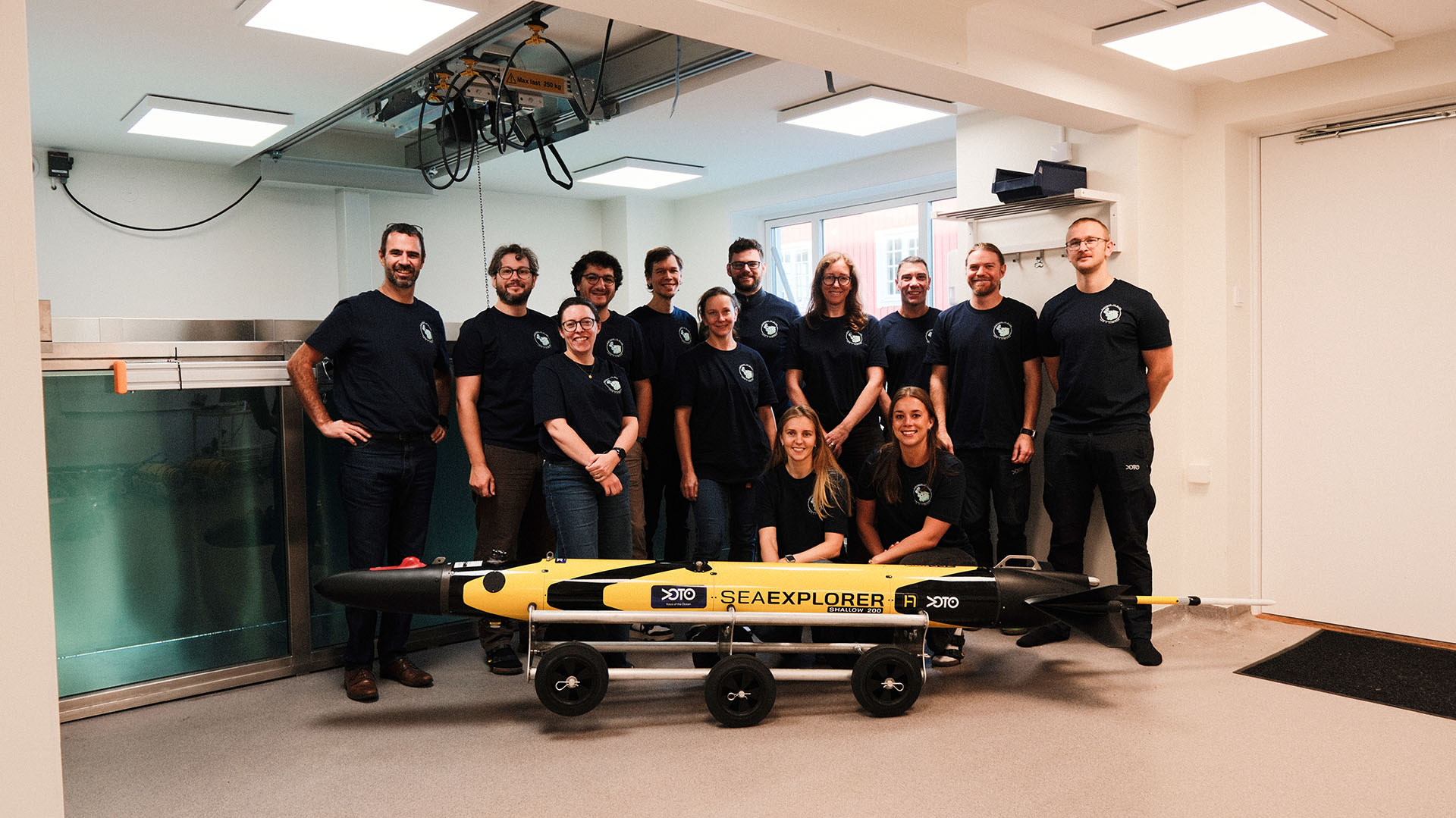
VOTO’s years of flying gliders through the Baltic helped define the problem. ALSEAMAR’s engineering expertise helped turn that problem into a new tool. Over several years, the two organisations worked closely on the development of a glider built for shallow, coastal and continental shelf seas.
VOTO also funded a significant part of the development costs. Importantly, the foundation chose not to take royalties from the innovation. The purpose was broader: to help make a better scientific tool available to VOTO and to the wider international community.
That decision says something important about the project.
This was not innovation for ownership. It was innovation for access.
A tool built from Baltic experience can now support ocean observation far beyond the Baltic.
Why endurance changes everything
For VOTO, the SeaExplorer 200 could transform the scale of its observation work.
The foundation’s existing fleet of deeper-rated gliders has already produced an extraordinary record of ocean conditions in the Baltic and nearby seas. But shallow water is hard on endurance. More frequent dives and climbs mean more energy use, more deployments, more recoveries and more time at sea for the operational team.
A glider designed specifically for shallow missions changes that equation.
As Olle Glader explains:
“Having a glider that only goes to 200 metres means it can be lighter and more efficient,” he says. “This makes a huge difference to its endurance.”
He continues:
“Right now, with the existing fleet of 1,000-metre-rated gliders, we get about 100,000 profiles per year from 75 missions and 80 to 90 sea days. With the new shallow gliders, we can probably drop to around 30 missions per year and still get 100,000 profiles. So theoretically, with a full fleet of shallow gliders, we can scale up to maybe 300,000 profiles. It allows us to potentially triple the scale and scope of our work.”
That is the deeper impact of the SeaExplorer 200.
It does not only help one glider travel further. It could help VOTO observe more sea, more often, with fewer missions and greater efficiency.
More profiles.
Longer coverage.
Less operational strain.
A clearer picture of the upper ocean.
From Baltic testbed to global tool
The Baltic is unusual, but it is not alone.
Around the world, many scientifically important waters are shallow, coastal, stratified or heavily used. Estuaries. Continental shelves. Nearshore seas. Regions where freshwater sits above saltwater, where ecosystems are under pressure, and where human activity meets ocean processes directly.
These are places where the upper 200 metres matter enormously.
As Olle says:
“The Baltic is unusually shallow, but not unique. The North Sea, for example, is also shallow and heavily used, and there are many estuaries and coastal regions where you have strong density differences – fresh water on top, salt water below – and relatively shallow depths. Even in the open ocean, if you only care about the upper 200 metres, why use a 1,000-metre-rated glider? You can use a more efficient 200-metre one.”
This is where a tool shaped by one sea becomes valuable to many.
The Baltic has acted as a proving ground. If technology can work there — in shallow water, strong layers, limited mixing and demanding operational conditions — it can help open new possibilities elsewhere.
That is why the SeaExplorer 200 matters beyond VOTO’s own missions.
It expands what autonomous ocean observation can be.
A memorandum for the future
In November 2025, Voice of the Ocean received the first SeaExplorer 200m Glider from ALSEAMAR and signed a Memorandum of Understanding with the company.
The agreement formalises a collaboration already built through years of practical work. It outlines a shared commitment to advance marine research technologies, develop best practices for data quality and piloting, promote glider-based ocean observations, enhance SeaExplorer technical capabilities, and support training and capacity building within the global glider community.
For ALSEAMAR, the partnership reflects a shared ambition to push the boundaries of ocean exploration and research. As Thibaud Bezacier, CEO of ALSEAMAR, said in the press release:
“We are proud to deliver the first Shallow Glider to the Voice of the Ocean Foundation,” said Thibaud Bezacier, CEO of Alseamar. “This partnership reflects our shared vision of pushing the boundaries of ocean exploration and research. The Shallow Glider is designed to operate where other autonomous platforms struggle, providing scientists with vital data from challenging shallow-water environments like the Baltic Sea.”
For VOTO, the delivery marks both an operational milestone and a statement of intent.
As Sanna Thimmig-Johansen, CEO at VOTO, said:
“I’m very proud of the work and dedication from our Ocean Tech Team in developing this project” said Sanna Thimmig-Johansen, CEO at VOTO. ”VOTO believes that this technology has the potential to significantly enhance global understanding of ocean processes, providing researchers with new insights into marine ecosystems, climate dynamics, and environmental change.”
The SeaExplorer 200 is not an endpoint. It is a platform for what comes next.
Reading between the layers
Ocean science depends on seeing what is otherwise invisible.
Temperature, salinity, density, oxygen, chlorophyll, currents, nutrients, gases and sound all help describe the living state of the sea. But these signals are not fixed. They move through layers. They rise and fall with seasons. They respond to storms, inflows, blooms, heat and human pressure.
To understand them, scientists need observation that is continuous, detailed and close to the processes themselves.
That is what gliders make possible.
And that is what the SeaExplorer 200 is designed to strengthen.
By working in shallower waters with greater efficiency, it can help researchers capture the upper ocean in finer detail — where light, life, weather, human activity and climate signals often meet.
For the Baltic, that means better insight into a sea under pressure.
For other coastal and shelf seas, it means a new way to observe environments that are often too complex for occasional sampling and too shallow for tools designed primarily for the deep.
From innovation to understanding
Voice of the Ocean was founded to help close gaps in ocean understanding.
Sometimes that means collecting data directly. Sometimes it means sharing that data openly. Sometimes it means supporting science through funding, vessels, expertise or storytelling. And sometimes it means helping develop the tools the scientific community needs next.
The SeaExplorer 200 sits at that intersection.
It is engineering shaped by science.
Technology shaped by place.
Collaboration shaped by a practical need.
A shallow glider may sound like a narrower instrument. In reality, it may widen what ocean science can see.
Because many of the ocean’s most urgent questions are not only in the deep. They are in the coastal seas, upper layers and living thresholds where change is already underway.
The SeaExplorer 200 helps bring those places into view.
And by doing so, it helps turn the next wave of ocean technology into the next wave of ocean understanding.