How Voice of the Ocean captured the environmental aftermath of a manmade catastrophe
The Nord Stream pipeline explosions of 2022 sent shockwaves around the world, but the environmental impact was only just beginning. VOTO’S scientists acted fast to capture what was happening beneath the waves – while the world above was still reeling.
- September 2022 explosions tore four holes in Nord Stream pipelines, severing undersea gas link between Russia and Germany and triggering global shock.
- VOTO deployed modified underwater gliders within a week, helping capture high-resolution methane measurements during the early response to the incident.
- Researchers recorded methane concentrations up to 1,000 times normal and plumes spread across nearly 600 kilometres of the southern Baltic.
- Explosions released about 465,000 tonnes of methane to atmosphere and almost 11,000 tonnes dissolved in the sea, affecting 23 marine protected areas.
- Long term ecosystem effects remain uncertain; investigators question pipeline risk assessments as geopolitical inquiries into culpability continue.
In the early hours of September 2022, seismic stations across southern Sweden and Denmark registered a violent tremor under the Baltic Sea. It was the unmistakable signature of an explosion – equivalent to a small earthquake – near the Danish island of Bornholm.
Later that day, reports began pouring in from ships and coastal patrols – the sea was seething. Boils of churning water had erupted on the otherwise calm surface of the Baltic. Then in the evening, there was a second, larger explosion northeast of Bornholm; maritime authorities warned of ‘navigational hazards’ from circles of roiling sea up to a kilometre wide.
But the turbulence caused by the explosions was not confined to the Baltic. Within hours, it was rippling through ministries, markets, battlefields and boardrooms across the world.
The bare facts of what had happened quickly became clear. Someone had blown four holes in Nord Stream 1 and 2, twin gas pipelines stretching 1,200 kilometres beneath the Baltic, linking northwest Russia to northeast Germany. With war raging in Ukraine, the explosions 80 or so metres under the sea had severed the main direct energy artery between Russia’s gas fields and energy-hungry Europe – the only route that bypassed Ukraine and other transit countries in the north.
Rapid response
The question of who was responsible dominated global news coverage. But the ramifications of the explosion were not simply political. Vast plumes of methane gas were surging from the pipelines – the source of the maelstroms on the surface. The environmental implications for the Baltic – already one of the planet’s most fragile seas – could potentially be significant. The methane, a potent greenhouse gas, was also likely to be evaporating from the sea and spilling into the atmosphere.
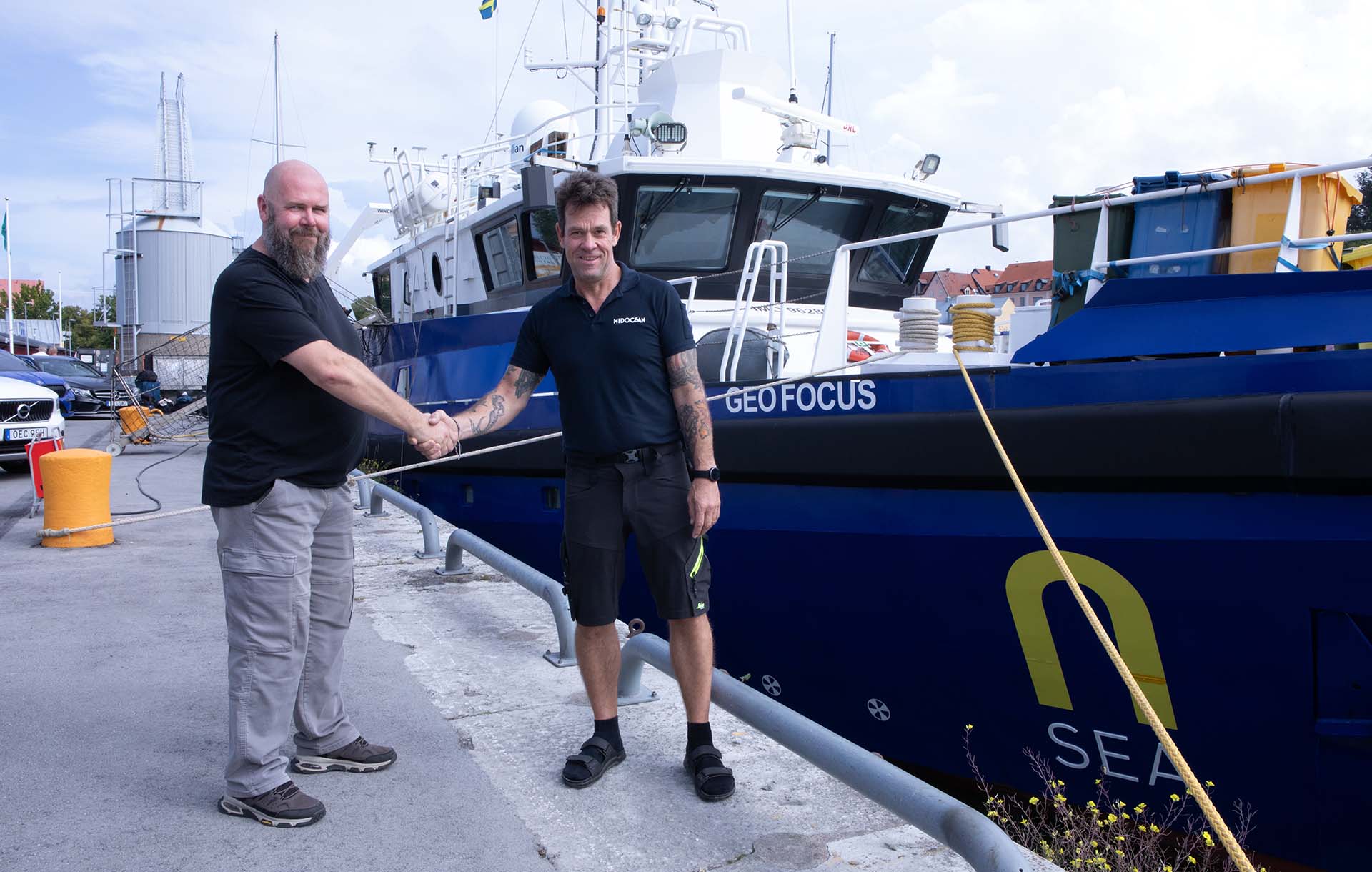
Within VOTO, the impulse to investigate was immediate. “The explosions happened during our annual conference, so everyone was together in one place,” explains Louise Biddle, Science Director. “One of our permanent observatories was just 20 kilometres from the site. We realised we had to act quickly.”
VOTO has a fleet of underwater gliders taking constant long-term measurements in a range of locations in the Baltic and Skagerrak Seas around Sweden. The gliders can be deployed fast, without the logistical drag of a full research vessel. But modifications still had to be made to these sentinels to equip them to investigate the methane leaks. “We had a methane sensor flown in from France by the glider manufacturer,” explains Louise. “Our team worked through the night to get everything ready and deployed the glider in very rough conditions – the sort we probably wouldn’t deploy in under normal circumstances – just over a week after the explosions.” VOTO’s gliders became forensic instruments in an environmental investigation with truly global consequences.
600 kilometres of contamination
VOTO’s gliders spent three months at and around the site of the explosions gathering high-resolution measurements on the level of methane contamination in the surrounding sea.
Preliminary findings showed dissolved methane concentrations as high as 1,000 times above ‘normal’ in places. But earlier in 2025, with the publication of three authoritative reports in the journals Nature Communications and Nature, the full picture was revealed.
Methane flooding out from the damaged Nord Stream pipelines was spread by ocean currents across a large area of the southern Baltic Sea and persisted for several months. In total, the plumes touched roughly 14% of the southern Baltic. Methane contamination affected a region stretching nearly 600 kilometres across the southern Baltic Sea, from the coast of Danish Zealand in the west to the Gulf of Gdańsk in the east, and affected 23 protected areas.
In total, the blasts released an estimated 465,000 tonnes of methane into the atmosphere – roughly comparable to the climate impact of Latvia’s entire annual greenhouse gas output – while a further total of almost 11,000 tonnes dissolved into the Baltic Sea. It was the largest recorded release of methane from a single human-caused incident in history.
Methane is not toxic at normal levels, but at extreme levels like this much remains unknown. “It’s not yet clear what high concentrations over a long time can do,” said Martin Mohrmann, a researcher at VOTO. “The honest answer is that we don’t know about the long-term ecosystem effects of the increased methane concentrations.”
Martin adds: “I believe that the risk assessment for gas pipelines like the Nord Stream pipelines have to be reevaluated. The Nord Stream risk assessments state that the probability of a gas escape would be about one event in 20,000 years, and that the solubility of natural gas in water is negligible. Both are now questionable.”
The question of who was responsible for the explosions continues to unfold. At the time of writing, German investigators believe a Ukrainian-linked team carried out the sabotage, and a Ukrainian national is in a high-security Italian prison pending possible extradition to Germany. But, while the geopolitical drama continues to play out, VOTO’s work has shed crucial light on how the ocean itself absorbs the shocks of human conflict.