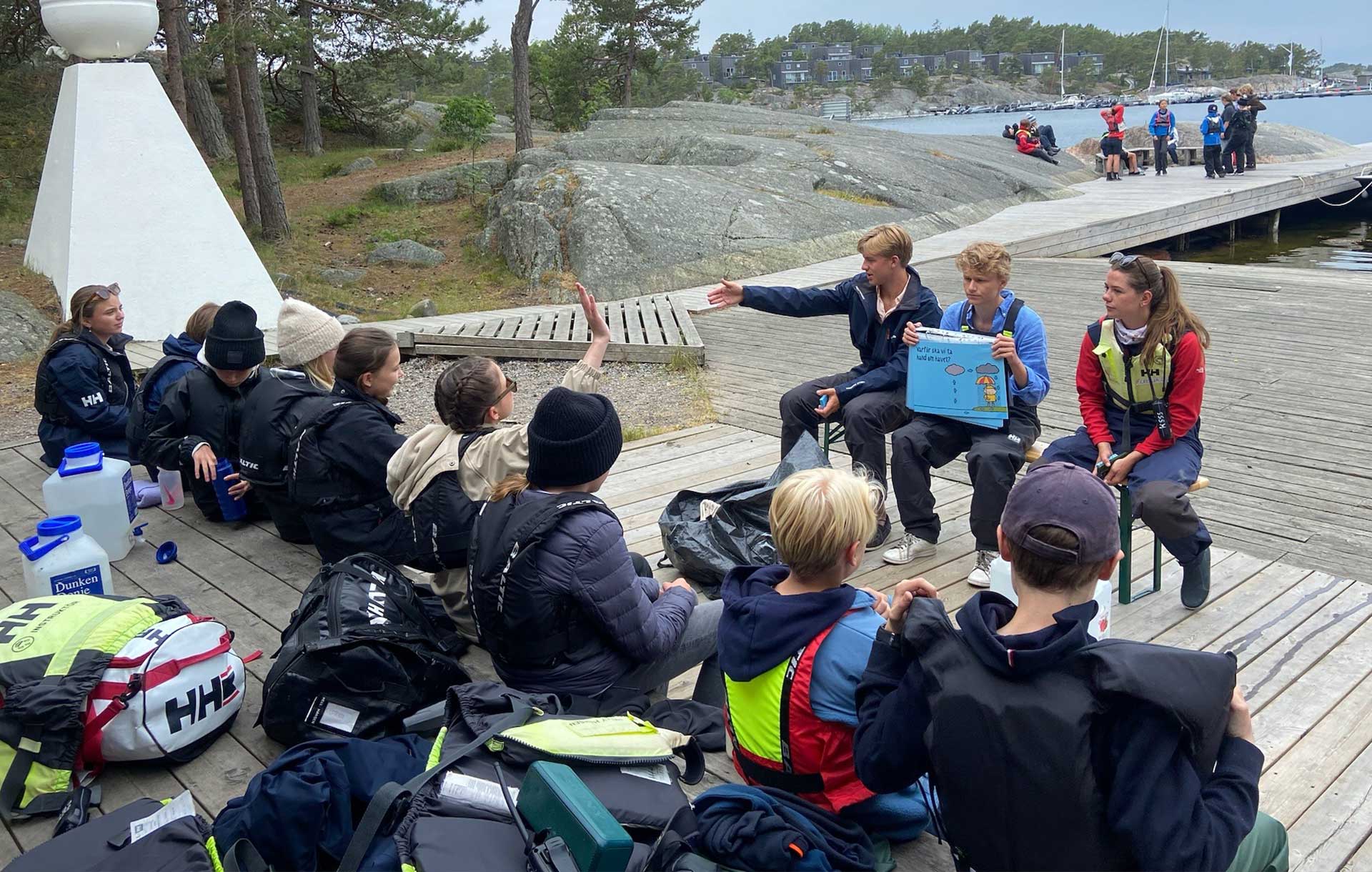
Through the Hej Havet programme, Voice of the Ocean and the Royal Swedish Yacht Club are helping young sailors see the Baltic not only as a place to sail, race and play — but as a living ecosystem shaped by human choices.
- Hej Havet links Voice of the Ocean and KSSS to bring ocean science into sailing culture, turning on-water experience into learning opportunities.
- It deepens young sailors’ existing connection, teaching the Baltic as a fragile living ecosystem shaped by pollution, climate change and human choices.
- Practical resources, workshops and race integration lower the threshold for ocean literacy, turning curiosity and time on the water into stewardship.
The sea as a classroom
Some children first meet the ocean in a textbook.
Others meet it in the wind.
They feel it in a sail, read it in a wave, hear it against the hull and learn its moods through movement. For generations of young sailors, the sea has not been distant or abstract. It has been a place of practice, freedom, weather, skill and discovery.
That connection is powerful.
But connection alone is not the same as understanding.
A young sailor may know how the wind shifts across open water. They may learn how to tack, trim, steer and race. They may understand the sea as a playground, a challenge or a second home. But beneath that familiar surface lies another story: a living ecosystem under pressure, shaped by climate change, pollution, eutrophication, biodiversity loss and human decisions made far from the shoreline.
Hej Havet — Hello Ocean — was created to bring that deeper story into view.
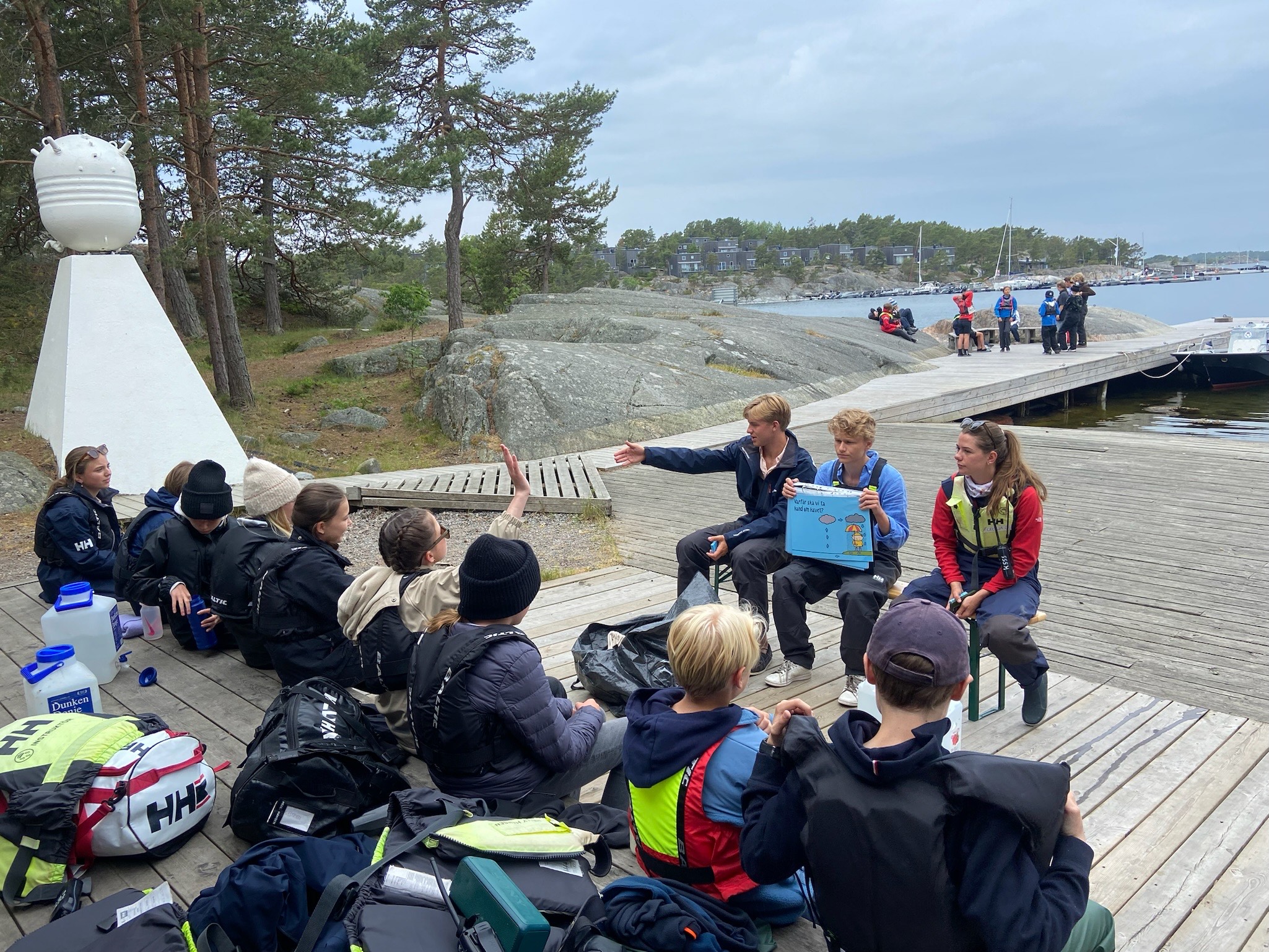
Through Voice of the Ocean’s partnership with the Royal Swedish Yacht Club, KSSS, the programme gives young sailors the tools to understand the Baltic Sea not only as a place they use, but as a living system they are part of.
A partnership already close to the water
For almost two centuries, KSSS has brought people into close contact with the winds, rhythms and moods of the sea through sailing. Racing has long been central to that culture, shaping generations of sailors who learn to read the sea through competition as well as recreation. Today, the club is Sweden’s largest sailing organisation and the second largest in the world — a community where membership often spans several generations of the same family.
That makes KSSS a natural partner for VOTO.
Voice of the Ocean works to make the ocean visible and understood. KSSS brings people into direct contact with it. Together, the partnership creates a bridge between experience and knowledge — between being on the water and understanding what is happening beneath it.
As KSSS’s sustainability partner, VOTO helps bring ocean knowledge directly into sailing culture. That includes structured educational materials for sailing schools and youth camps, expert lectures and panel discussions at major events, and ocean awareness integrated into flagship races such as Gotland Runt.
Hej Havet is one of the clearest expressions of that work.
It starts with young sailors — because they are already listening to the sea.
More than a playground
The Baltic is easy to love from the surface.
Its islands, bays, summer light and changing weather have shaped coastal life for centuries. For sailors, it is a place of movement and learning, where every outing teaches something about patience, judgement and respect.
But the Baltic is also one of the world’s most fragile seas.
It is shallow, semi-enclosed and heavily affected by human activity. What happens on land flows into it. What happens beneath the surface shapes everything from water quality and algal blooms to fish habitats, seabed ecosystems and the future of coastal life.
Hej Havet helps young sailors connect those realities.
Through tailored educational materials for KSSS sailing schools and youth camps, the programme helps students understand the Baltic Sea not just as a playground, but as a living ecosystem shaped by human choices.
That shift matters.
A playground is somewhere you go.
An ecosystem is something you belong to.
When young people begin to see the difference, sailing becomes more than sport. It becomes a route into ocean literacy.
From familiarity to stewardship
Many ocean education projects begin by trying to make children interested in the sea.
Hej Havet begins somewhere else.
The interest is already there. The sea is already part of the children’s lives. The task is to deepen that relationship — to turn familiarity into knowledge, and knowledge into responsibility.
That is why the programme fits so naturally within VOTO’s wider Ocean Education work.
Ocean Education exists because the ocean is still too often absent from how young people learn to understand the world. As Niklas Nilsson, Head of Ocean Education, explains in the PDF:
“There’s a global problem,” explains Niklas Nilsson, Head of Ocean Education. “The ocean isn’t explicitly covered in most national curricula, including Sweden’s.”
Hej Havet responds to that gap outside the traditional classroom. It meets children where they already encounter the sea: in sailing schools, youth camps, harbours, boats and coastal communities.
This is ocean learning in motion.
Not a lesson about the ocean from a distance, but an invitation to look again at the water directly beneath the hull.
Learning where curiosity already lives
Children are naturally drawn to the ocean.
They are fascinated by whales, sharks, clownfish, strange deep-sea creatures, waves, storms and the idea of a world beneath the surface. But curiosity needs somewhere to go. Without guidance, the ocean can remain a collection of images rather than a system to understand.
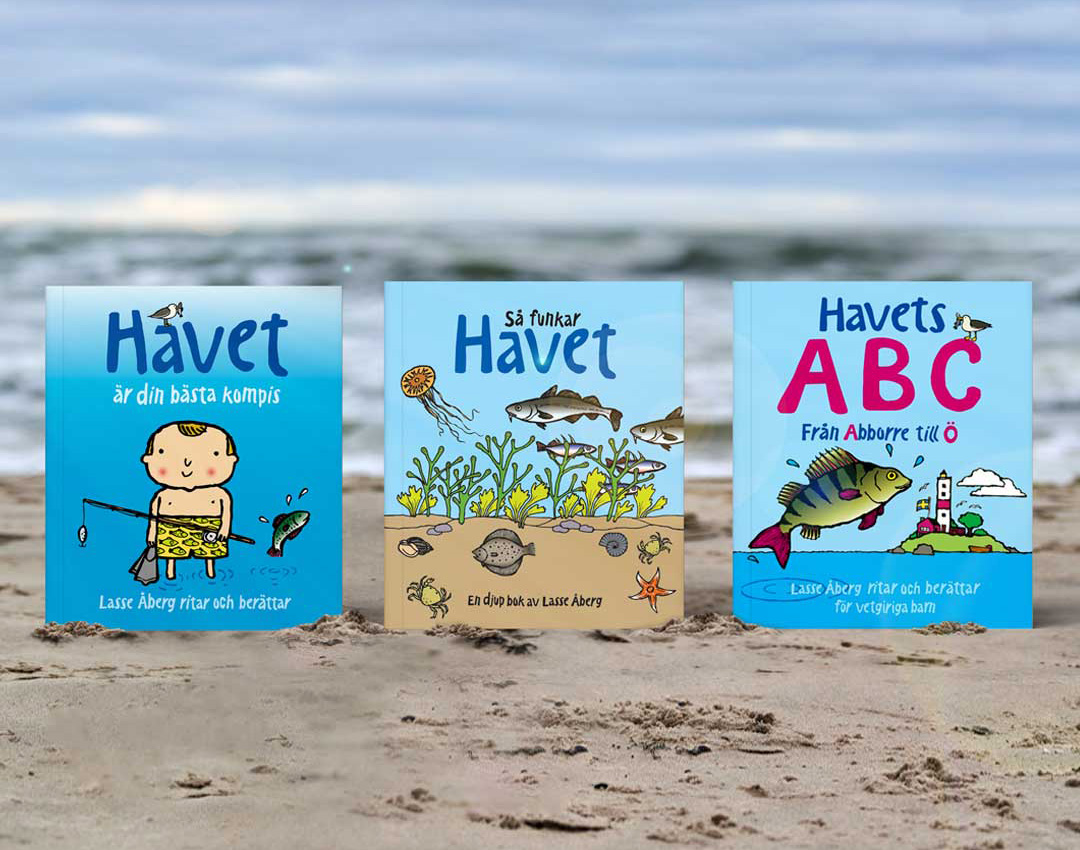
That is one of the reasons VOTO’s Ocean Education work has grown from books and teaching materials into partnerships, workshops and public learning experiences.
The approach is pragmatic. Rather than waiting for ocean literacy to be formally embedded in every curriculum, VOTO works from the ground up — giving teachers, educators and partner organisations tools they can use now.
As Niklas says:
“Our job became lowering the threshold,” Niklas says. “Making it easy to bring the ocean into class.”
Hej Havet applies that same principle to sailing.
It lowers the threshold for bringing ocean knowledge into places where young people are already learning — not only in classrooms, but on docks, in clubs, in camps and out on the water.
Sailing culture, ocean culture
Sailing teaches people to pay attention.
To the wind. To the current. To the clouds. To the balance of a boat and the behaviour of the water around it.
Hej Havet builds on that attentiveness.
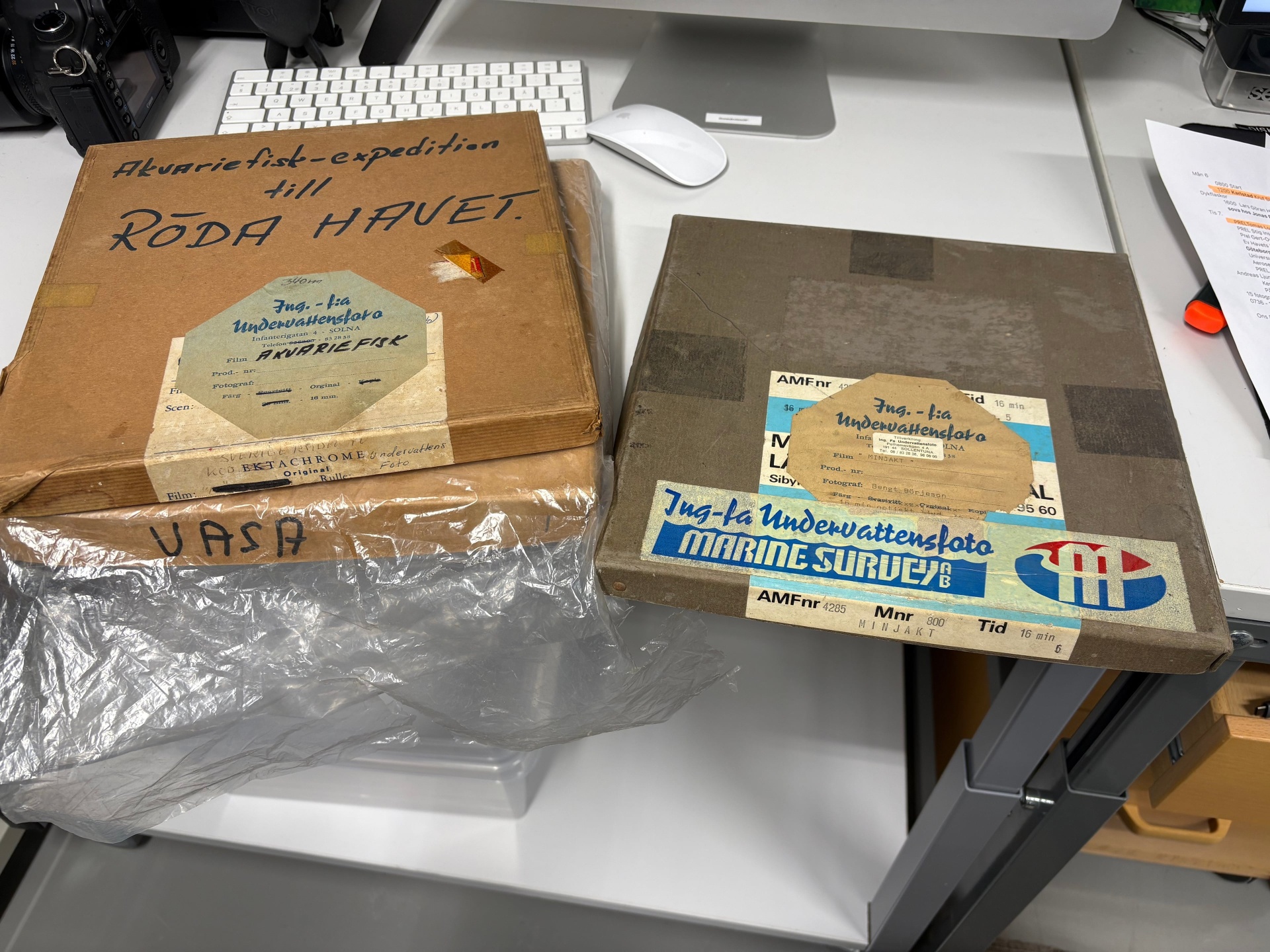
If a sailor can learn to read a gust, they can also learn to ask what lies beneath the surface. Why does the water look different here? What lives below? How does nutrient runoff affect algal blooms? Why do some seabeds hold shipwrecks for centuries? What makes the Baltic so sensitive? How do human choices on land shape what happens at sea?
Those questions expand sailing culture into ocean culture.
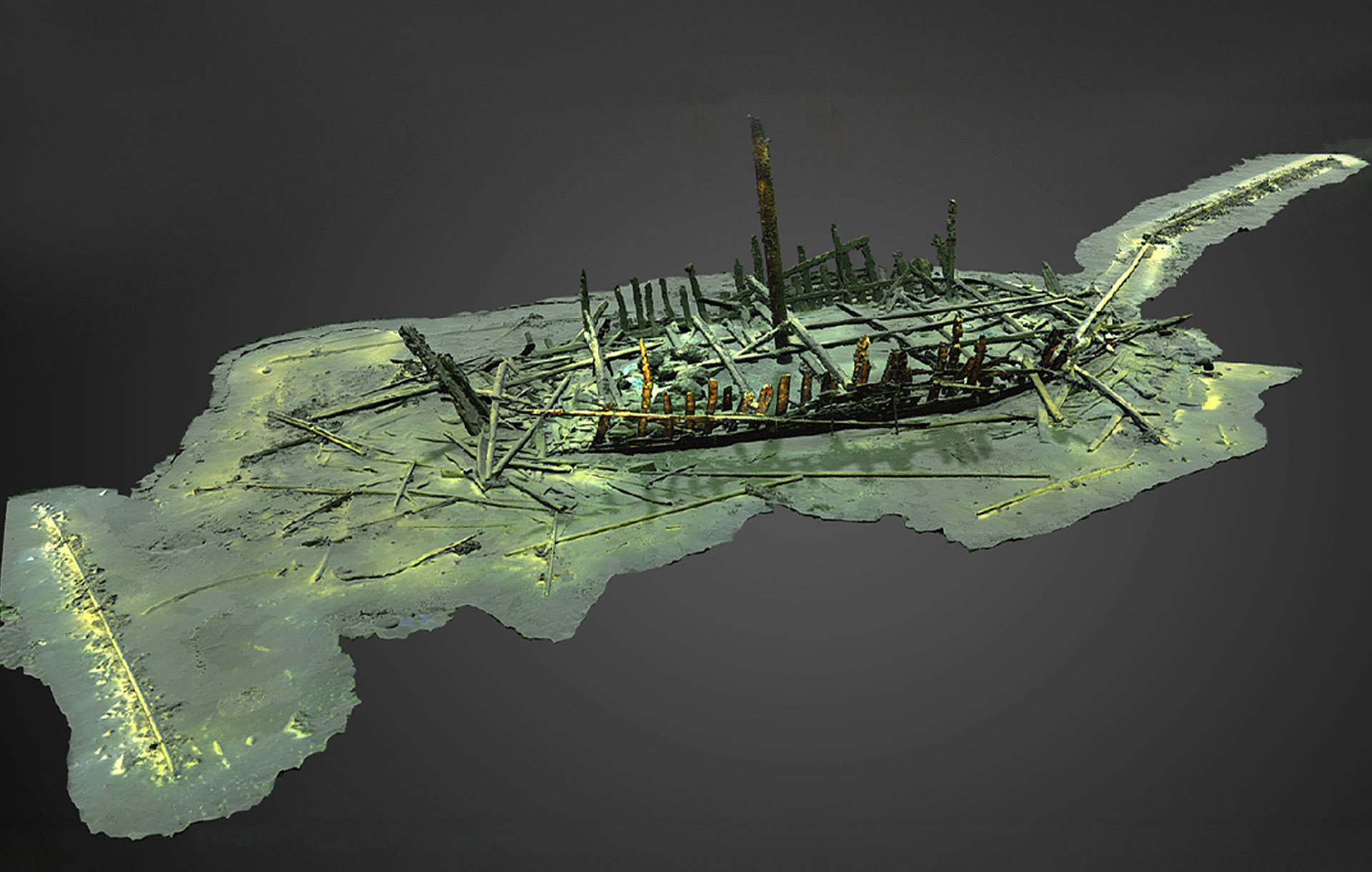
The VOTO and KSSS partnership is also exploring digital navigation tools that could enrich race routes with short insights into what lies under the hull — from shipwrecks preserved by the Baltic’s unique chemistry to sensitive ecosystems.
That idea captures the spirit of the collaboration.
The route is not only a line on a chart.
It is a story moving across a living sea.
A club in step with the times
For KSSS, the partnership is not only about education. It is part of a broader responsibility.
The club’s relationship with the ocean is deep, practical and generational. Its members do not encounter the sea as an abstract concern. They sail on it, race across it, train on it and pass that experience on.
Through Hej Havet and the wider VOTO partnership, that relationship is being strengthened with science, learning and a clearer sense of stewardship.
As Stefan Rahm, Club Director at KSSS, says:
“For us at KSSS, the ocean is naturally at the centre – not only as an arena for sailing and recreation, but as something we care for and take responsibility for. With VOTO as a partner, we strengthen our role as a club in step with the times.”
That is the heart of Hej Havet.
It does not ask young sailors to stop seeing the Baltic as a place of joy, sport and adventure. It asks them to see more.
To understand that the same sea that carries them is also vulnerable. That the same water they learn to navigate is shaped by choices. That care begins with knowledge, and knowledge begins with attention.
The next generation already has the wind
Ocean literacy is often described as something we need to build.
But in communities like KSSS, some of the foundations are already there. Young sailors know what it means to depend on the sea. They know that conditions change. They know that respect matters.
Hej Havet adds another layer.
It gives language to what lies beneath the surface. It connects sailing to ecology, recreation to responsibility, and direct experience to deeper understanding.
That is why reaching an already ocean-connected community matters. These young people are not starting from zero. They already have the wind, the water and the habit of paying attention.
VOTO and KSSS are helping turn that into something more enduring.
Familiarity into knowledge.
Knowledge into stewardship.
Time on the water into care for the living ocean.
FROM WATER TO UNDERSTANDING
Hej Havet helps young sailors understand the Baltic Sea not only as a place to sail, race and play — but as a living ecosystem shaped by human choices.
Through Voice of the Ocean’s partnership with KSSS, the programme brings ocean knowledge into sailing schools and youth camps, helping the next generation turn time on the water into deeper care for the sea.