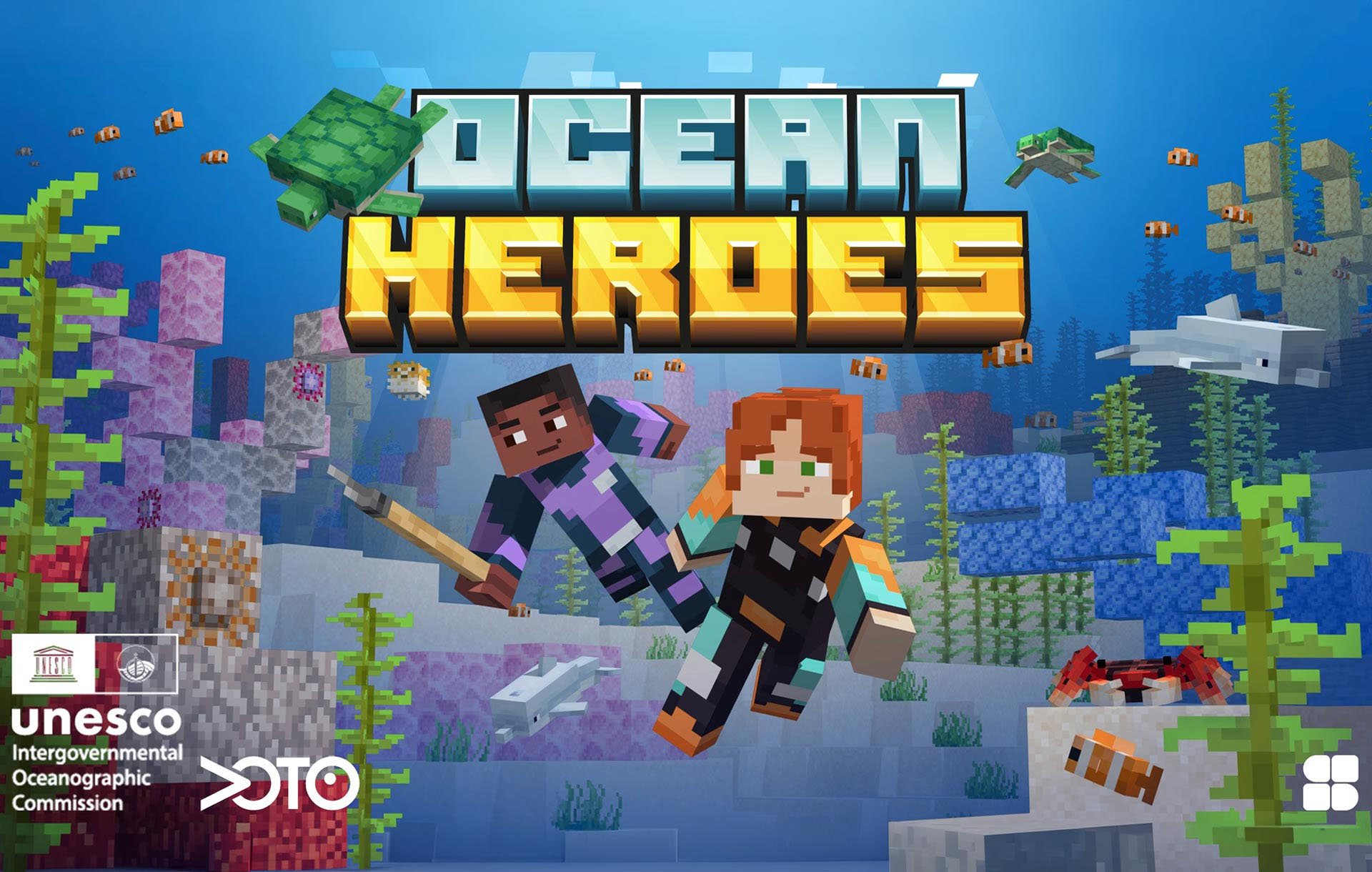
Minecraft: Ocean Heroes turns ocean conservation into something young people can explore, test and repair for themselves. Created by IOC/UNESCO and Voice of the Ocean, the game has introduced to millions of players to real marine challenges through play.
- Ocean Heroes uses Minecraft play to teach ocean conservation through exploration, experimentation and problem solving, turning learning into hands-on experience.
- More than two million downloads, mostly ages eight to fourteen, creating a global pathway that meets young people where they already play and imagine.
- Built on real conservation challenges, playable missions show ecosystems respond and can recover, converting curiosity into care and motivating informed action.
A world built on possibility
Some games are built around winning. Minecraft is built around possibility.
With around 200 million active users, its power lies in a simple idea: For ocean literacy, that matters.
The ocean is often taught as something distant, fragile or difficult to understand. It can become a lesson, a warning, a diagram, a chapter in a crowded syllabus. But for young people, understanding often begins somewhere else: in curiosity, movement and the chance to try.
Minecraft: Ocean Heroes takes that sense of possibility and turns it towards the sea.
Commissioned by UNESCO’s Intergovernmental Oceanographic Commission and developed by ShapeScape together with Voice of the Ocean, the experience invites players to become ocean Heroes. Not passive observers. Not simply learners. Heroes.
Through exploration, experimentation and problem-solving, players enter a living marine world where the ocean is damaged, but not beyond repair.
Learning by doing
Ocean Heroes does not begin with a lecture.
It begins with a world to enter.
Inside the game, players move through three ecosystems, each shaped by real-world pressures. In mangrove forests, they plant trees that protect coastlines from erosion and storms. On coral reefs, they tackle invasive species and help restore damaged habitats. In kelp forests, they see how ecosystems can unravel when predators disappear — and how balance can return when sea otters are reintroduced.
These are complex ecological ideas. Biodiversity. Interdependence. Resilience. Trophic balance. Habitat restoration.
But in Ocean Heroes, they are not presented as abstract terms. They become actions.
Players test what happens when a system is damaged. They see how one change affects another. They learn that the ocean is not a backdrop, but a living network of relationships.
That is the strength of the format. It does not only tell young people that ecosystems are connected. It lets them feel the consequences of connection for themselves.
From screen to sea
The game has been downloaded more than two million times, with most players aged between eight and 14. That makes Ocean Heroes more than a digital project. It is a pathway to the next generation of ocean protectors.
For Voice of the Ocean, this sits at the heart of ocean literacy.
Knowledge alone is not enough if it remains distant. Facts need to become understandable. Understanding needs to become personal. And personal connection is often what turns awareness into care.
Ocean Heroes does this by meeting young people where they already are.
Instead of asking them to step out of their world and into ours, it brings the ocean into a space they recognise. A space of play, imagination and shared discovery.
The result is not a simplified version of ocean science. It is a different doorway into it.
Real science, playable worlds
The best learning experiences do not hide complexity. They make it possible to approach.
Ocean Heroes is built around real conservation challenges, but translates them into playable missions. Mangroves are not just scenery; they are coastal protection. Coral reefs are not just colourful worlds; they are habitats under pressure. Kelp forests are not just underwater landscapes; they are systems that depend on balance.
Guided by in-game scientists, players encounter the living logic of these ecosystems through the medium of play. They are asked to observe, act, adapt and repair.
That is a powerful shift.
Environmental communication can easily become a list of losses. But Ocean Heroes gives players a different experience: the chance to see that systems respond. That damage can be understood. That the right actions can make a difference.
The message is not naïve. The ocean is under pressure. But it is also alive, dynamic and capable of recovery when people understand how to act.
A collaboration with global reach
Ocean Heroes is part of VOTO’s wider collaboration with UNESCO’s Intergovernmental Oceanographic Commission, a partnership focused on connecting ocean science with the public imagination. Through initiatives like Ocean Heroes, that collaboration has helped bring ocean literacy to millions of people around the world.
At its core, the partnership is about translation.
Not translation from one language to another, but from knowledge to engagement. From science to public understanding. From global ocean challenges to experiences that people can grasp, remember and share.
That work also connects to the wider ambitions of the UN Ocean Decade, which calls for stronger ocean knowledge, broader public engagement and more effective action for the ocean’s future.
Ocean Heroes shows what that can look like when ocean literacy enters a new kind of classroom: not rows of desks, but a shared digital world.
The ocean as something we can repair
One of the most important lessons in Ocean Heroes is also one of the simplest.
The ocean is damaged, but far from lost.
That idea matters because despair is not a strategy. If young people only inherit stories of decline, they may learn the facts — but lose the belief that action matters.
Ocean Heroes offers another route. It shows that ecosystems can be harmed, but also helped. That balance can break, but also return. That the future of the ocean is not fixed; it is shaped by choices.
Those lessons begin on a screen. But they do not stay there.
A child who restores a mangrove forest in Minecraft may later understand why real mangroves matter. A player who sees a kelp forest recover after sea otters return may better grasp the importance of predators, balance and biodiversity. A young person who repairs a digital reef may begin to see the real ocean not as distant scenery, but as a living system they are connected to.
That is where play becomes more than play.
It becomes a rehearsal for care.
From curiosity to action
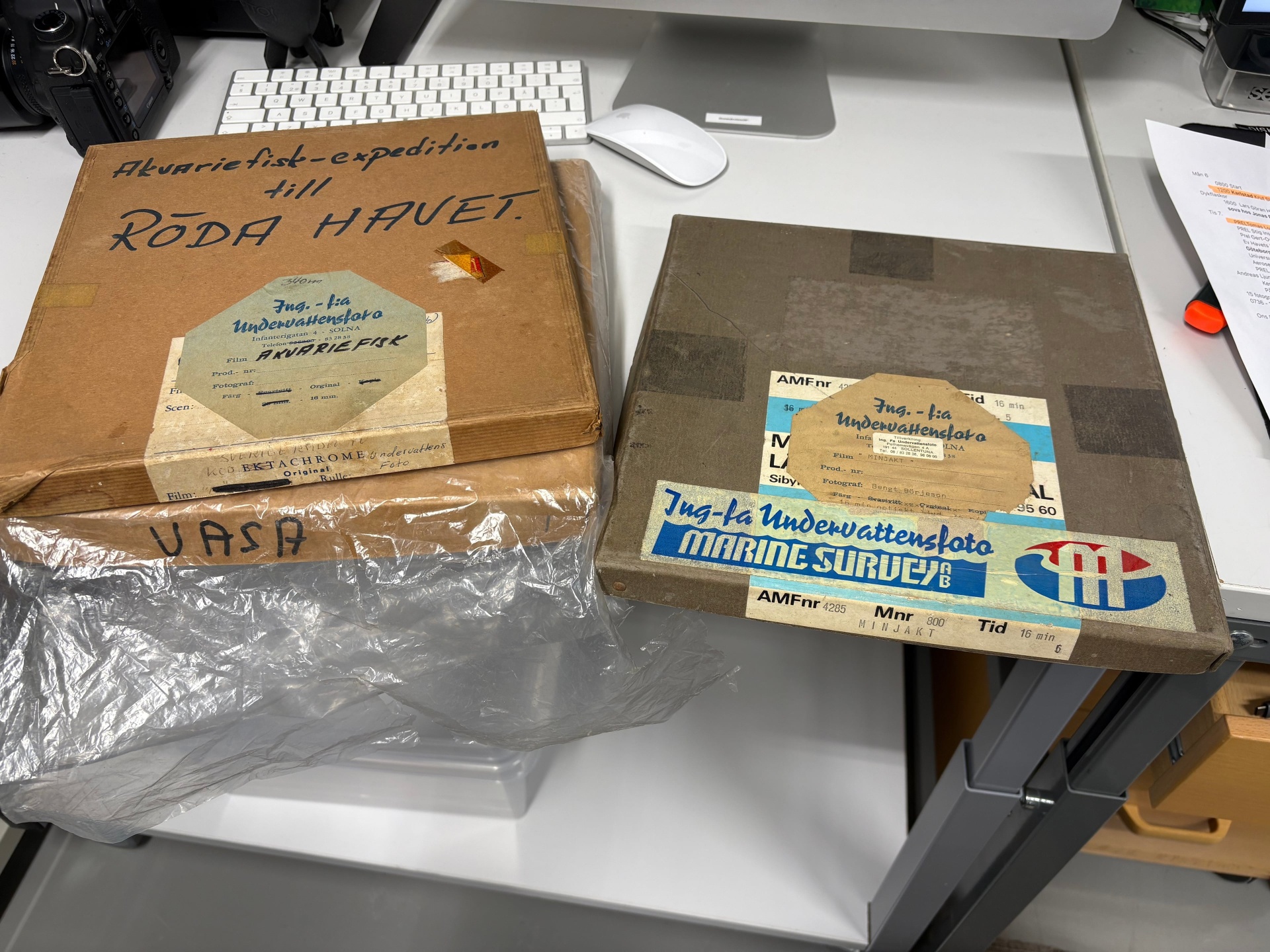
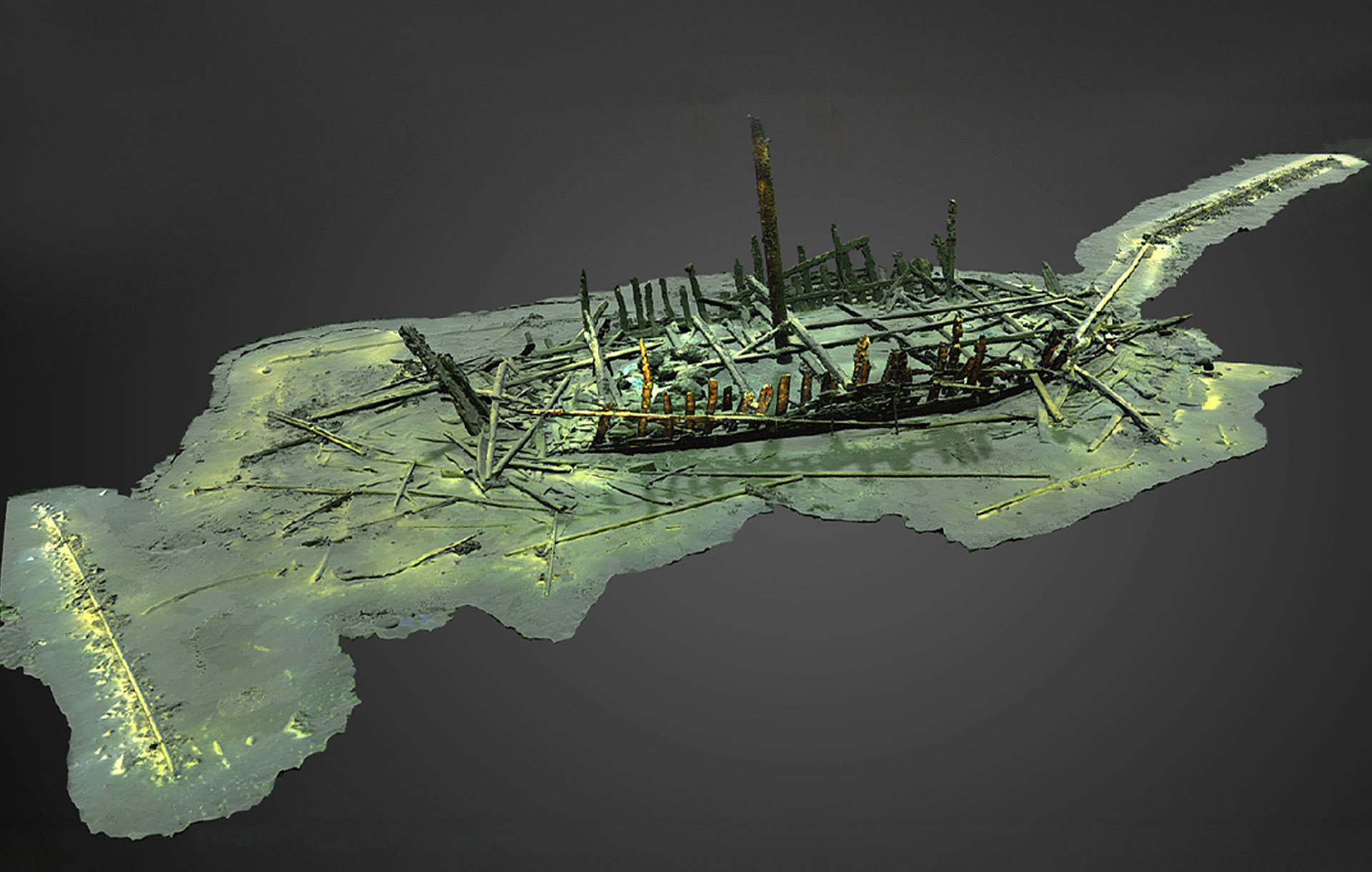
Voice of the Ocean works to make the ocean visible and understood. Sometimes that means collecting data beneath the surface. Sometimes it means preserving stories from the past. Sometimes it means giving young people a world where they can discover, repair and protect the sea for themselves.
Ocean Heroes belongs to that same chain.
It takes real ocean challenges and turns them into something young people can enter. It replaces distance with participation. It transforms concern into curiosity, and curiosity into action.
Two million players have already stepped into that world.
One shared goal remains: helping the next generation understand that the ocean’s future is not only something to learn about.
It is something to help shape.