Today, GO Ocean is launched during UN General Assembly week in New York. Developed by the Global Ocean Observing System (GOOS) and Voice of the Ocean (VOTO), and supported by IOC-UNESCO, the campaign argues for ocean observation as fundamental infrastructure and gives people and organisations concrete ways to act. It launches on the same day as the OceanEye International Alliance for GOOS, a joint initiative between the EU and Canada.
New York, 23 September 2026 – This week’s weather forecast, the price of a banana, a ship’s route across open water and a farmer’s harvest schedule all depend on a system most people never see. This is the ocean observing system, a global network of buoys, floats, gliders, ships and satellites that watches the ocean around the clock, though coverage is uneven. It is fundamental infrastructure, yet it is almost invisible and underfunded.
Campaign video for Go Ocean, shown during United Nations General Assembly in New York.
A system carried by a few
IOC-UNESCO estimates public investment in ocean observation at around €1 billion a year. That covers only 60 to 70% of what the full system requires, and a handful of countries carry most of the cost.
That investment gap and inequality will not close on its own. 2026 is the year to start changing it. The EU-led OceanEye initiative, launched in June, named ocean observation as essential infrastructure and proposed an international alliance to support GOOS. Today, that alliance becomes real: the OceanEye International Alliance for GOOS is launching as a joint initiative between the EU and Canada, in partnership with IOC-UNESCO and GOOS.
Ten ways to act
GO Ocean is a sustained communications campaign guided by a steering group of international experts in science, observation, policy, industry and finance. Its aim is that by 2030, ocean observation is understood, funded and used as the fundamental infrastructure it has become. To get there, the campaign aims to persuade its audience of the importance of ocean observations, and converts this commitment to activity by providing ten actions for people and organisations.
Some commitments are about visibility, such as sharing the campaign’s film, slides and talking points, or putting ocean observation on the record in board minutes, ESG reports, parliamentary questions and ministerial speeches. Others are about resources: supporting observing system coordination and national focal points, investing in in-water platforms, sharing operational data from ships and platforms under open terms, and backing capacity development in Large Ocean States and the Global South. Organisations can also step up as champions by convening a cross-sector roundtable or joining the campaign network. All campaign materials are free to use.
Why VOTO is part of GO Ocean
VOTO’s work is anchored in the Baltic Sea, but the global ocean is one system. VOTO’s fleet of autonomous underwater gliders collects continuous, high-resolution measurements in the Baltic and Skagerrak Seas around Sweden, relaying data to international networks as they surface. All observations are shared openly through VOTO’s observations portal, and the data feeds into climate studies, ecosystem research and weather forecasting.
“Understanding how our ocean is changing depends on sustained, coordinated observations that help us build a picture over time. For VOTO, supporting ocean observations is an investment in the infrastructure and knowledge we need to understand the ocean and make better decisions for its future. GO Ocean is about ensuring that responsibility is recognised and shared.” – Louise Biddle, Science Lead at Voice of the Ocean Foundation and Coordinator for the GO Ocean campaign.
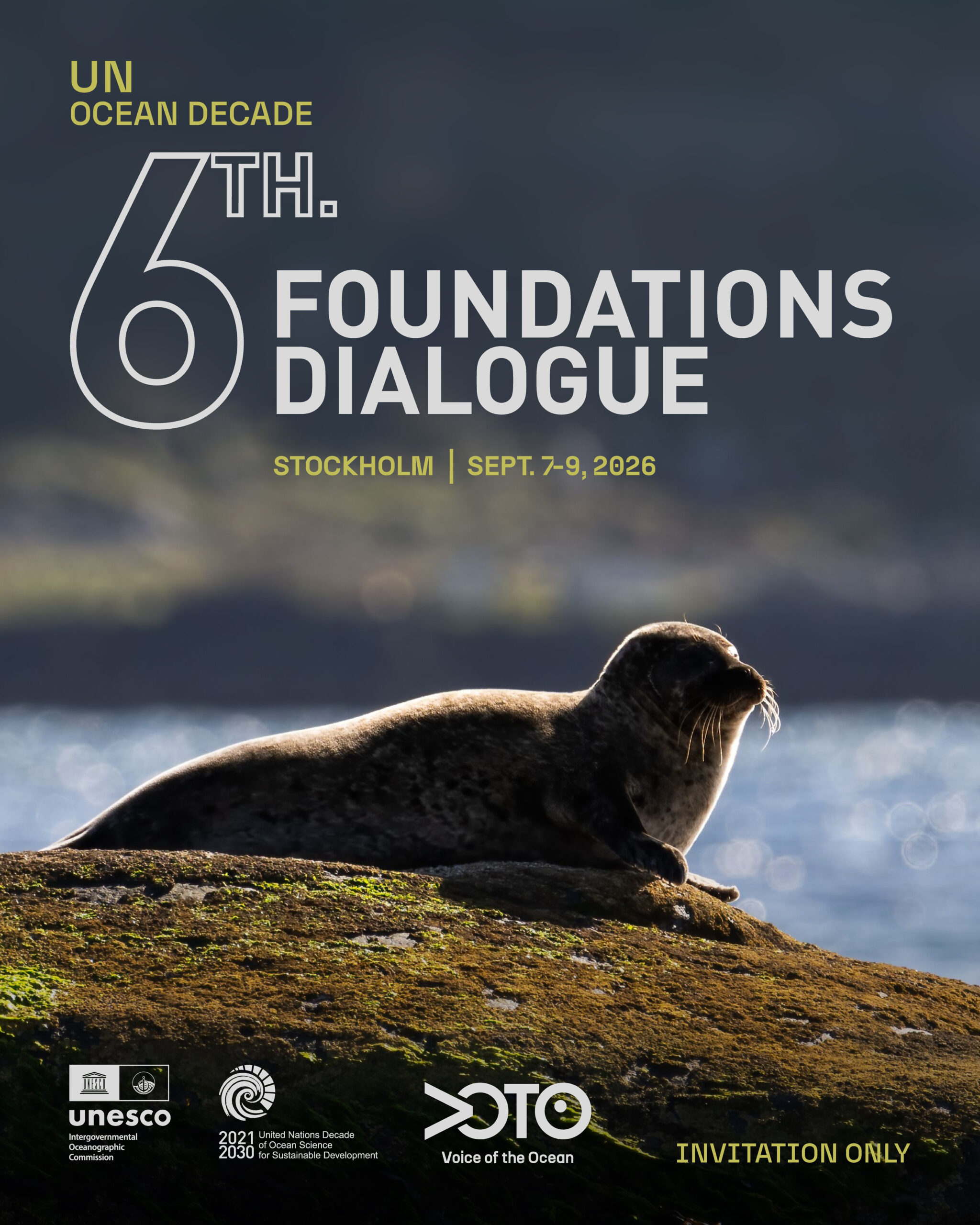
VOTO has long championed investment in global ocean observation systems, the networks of sensors and data that act as the ocean’s eyes and ears. Earlier this month, VOTO and IOC-UNESCO convened the 6th UN Ocean Decade Foundations Dialogue in Stockholm, where the opening forum focused on ocean literacy and ocean observations.
The ocean observing system already runs in the background of daily life. Explore the campaign, choose a commitment and download the materials.
MEDIA CONTACT: Robert Kautsky, Head of Communications